
By Satish Kanady / The Peninsula
QINVEST, Qatar’s leading investment group, is set to
reinforce its presence in Turkey. Amidst a raft of global
market challenges, the prominent Qatar-based Islamic
financing investment bank, is betting on Emerging Market
equities, Europe and other developed markets.
As the general mood across all markets remains uncertain,
QINVEST is cautious about the impact of the current
macroeconomic environment on its existing portfolio. “Our
approach can be summarised as being cautiously
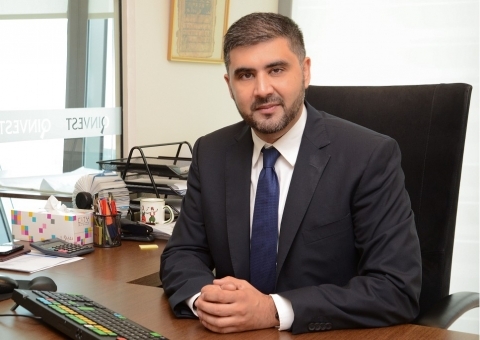
optimistic”, Dr Ataf Ahmed (pictured), Head of Asset
Management, QINVEST told The Peninsula in an extensive
interview.
“QINVEST is seeing huge opportunities in various asset
classes in Turkey. In Turkey, for instance, we see Islamic
finance outperforming conventional finance and have
therefore spent a significant amount of effort and
investment making and marketing our products to the local
market there.
In 2016, we acquired ERGO Portfoy, one of the largest and
fastest growing asset management companies in the country.
The acquisition of ERGO Portfoy gave us a unique platform
to quickly grow in a market that boasts significant growth
and potential. Rebranded QInvestPortfoy, the company is
one of the leading asset management groups in Turkey with
over 1.0billion Turkish Liras in assets under management,
providing pension and mutual fund and discretionary
portfolio management services.”, Dr Ataf said.
QInvestPortfoy is expected to play a major role in
attracting new investments into Turkey, delivering high
value services to a larger client base. It will also
benefit from the world-class capability that QInvest
currently provides.
QINVEST is also seeing opportunities within Emerging
Markets equities, despite the inherent volatility of the
asset class, as it thinks that the broad economic backdrop
within EM has improved. “Inflation is coming in under
control and there are a number of positive surprises in
economic growth. Valuations within the EM equity space are
attractive, especially when considering valuations
relative to developed markets. Therefore, our positive
outlook is driven by both an attractive long term economic
outlook and favourable valuations”, he said.
“Within Developed Markets, we see the main opportunity in
niche markets and in the alternative space. Quantitative
Easing out of Europe and the US have driven traditional
asset prices to record highs, and we think as we see
central banks shrink their balance sheet that we may see
heightened volatility and a fall in certain asset prices,
especially if we see a slowdown in growth.” Explaining on
QINVEST’s exposure to EMs Dr Ataf said: “Our primary
exposure to Emerging Markets comes through in-house
managed portfolios which focus on this region. These
portfolios have exposure to both equities and sukuk. We
also have exposure through QInvestPortfoy, which manages
Turkish Equities and Sukuk for a number of institutional
investors. There is also exposure to broader EM within
some of our global funds and mandates, however this is
minimal and represents approximately 10 percent of total
assets across all funds.”
On the potential impact of liquidity crunch on GCC’s deal
making, he said ‘liquidity crunch is something that comes
and goes’. Across the region there is now an acceptance
that low oil prices are the new normal and businesses have
adjusted and are basing their forecasts on “low for long”.
“We are seeing GCC nations reinforcing their plans to
diversify the economies – moving into sectors like
finance, trade and tourism.”
Liquidity crisis will come and go, says QINVEST
As markets tend to offer investors a mixed bag of
outcomes, Qatar’s leading investment group QINVEST is
bullish on Turkey, Europe and the US. It’s also betting on
Emerging Market equities.
QINVEST is cautious about the impact of the current
macroeconomic environment. The investment group sees
potential headwinds arising from the impact of a delayed
FOMC monetary tightening policy and believes the ECB’s
removal of Quantitative Easing could expose the Eurozone
periphery to a sell-off, reducing liquidity in EM credit
markets. It also sees an increase in profit-taking in
equities and credit, as the opportunity cost of
money-market investments declines post rate hikes.
“There are additional concerns from increasing
geopolitical risks both within the region here as well as
arising from an increasingly confrontational tone between
the US and its allies and North Korea. However, despite
the market sentiment, we continue to identify pockets of
investment opportunity within key sectors and geographies.
Our approach can be summarised as being cautiously
optimistic”, Dr Ataf Ahmed, Head of Asset Management,
QINVEST told The Peninsula in an extensive interview.
Explaining on QINVEST’s exposure to EMs Dr Ataf said: “Our
primary exposure to Emerging Markets comes through
in-house managed portfolios which focus on this region.
These portfolios have exposure to both equities and sukuk.
We also have exposure through QInvestPortfoy, which
manages Turkish Equities and Sukuk for a number of
institutional investors. There is also exposure to broader
EM within some of our global funds and mandates, however
this is minimal and represents approximately 10 percent of
total assets across all funds.”
On the potential impact of liquidity crunch on GCC’s deal
making, he said ‘liquidity crunch is something that comes
and goes’.
While the current market environment across the globe is
challenging, financial institutions in the GCC region are
in a very strong financial position to international
players. Liquidity in the GCC has been undoubtedly
tightened as a result of the pressures on the oil price,
there is also opportunity as we see the rise of growth
industries which require innovative finance solutions and
institutions look outside of traditional assets and funds
for investment.
“We are seeing GCC nations reinforcing their plans to
diversify the economies – moving into sectors like
finance, trade and tourism. The biggest impact in the
region has been the tightening of government spending and
introduction of initiatives to compensate for lower oil
prices such as the removal of subsidies and introduction
of VAT.”