
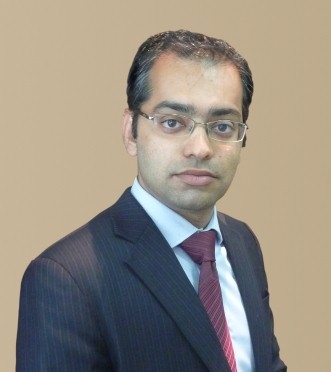
• QInvest’s Head of Capital Debt Markets, Hani Ibrahim, talked about Sukuk, Infrastructure and Project Finance In the GCC
Acknowledged as one of the most developed Islamic markets,
Saudi Arabia is a destination that should not be
overlooked, according to Islamic Finance News (IFN) Forum
that kicked-off here on Monday.
Participants said they were keen to see growing interest
in Islamic finance in the world, especially Asia, Europe
and even Africa. According to them, lack of awareness and
enough human capital with skills are among the big
challenges that Islamic finance faces today.
In this context, experts call for a long-range plan to
develop manpower starting from the universities level.
Islamic finance also needs training centers where bankers
can be trained.
In this context, the morning session featured signing of a
memorandum of understanding (MoU) between CIMB Islamic
Bank and IRTI on the Islamic Finance Country Report for
Malaysia.
The Malaysian-based IFN under Redmoney group said prior to
its Riyadh event that the Kingdom holds 18 percent of
global Islamic banking assets and 14 percent of Islamic
fund assets. It is home to 10 of the 20 largest Islamic
funds and over 160 Islamic funds in total.
The 3rd IFN Saudi Arabia was attended by both local
economist experts in this vibrant sector, the Kingdom’s
Islamic capital market picks up and the government
allocates a significant amount from its budget toward the
development of infrastructure projects ranging from
educational institutions to health care to power and
transport.
“While the country aims to diversify its revenue
generating markets, currently approximately 90 percent of
government revenues and 85 percent of exports stem
directly from the hydrocarbons sector,” said IFN in a
statement, Yet, with the stock markets set to open to
foreign investors in 2015, the country offers exciting
prospects that could revolutionize the international
Islamic investment market.
This year’s IFN Forum will without a doubt give
participants a key advantage in leveraging Saudi Arabia’s
rapidly developing Islamic finance market.
Mohammad Ali Algari, professor of Islamic Economics, King
Abdul Aziz University, was among the key speakers while
discussion began with a CEO session on how to advance
Saudi Arabia’s progress in the Islamic investment
landscape on a global scale.
The session featured a list of experienced industry
professionals, including from CIMB Islamic Malaysia,
Islamic Research and Training Institute, Islamic
Development Banks Group, Alkhair International Islamic
Bank and Prudential Corporation.
A global real estate roundtable was conducted to assess
opportunities for Saudi investors in real estate that
continues to be a key driver for economies in the Middle
East, Europe and other parts of the world, projects that
are currently under way in the GCC estimated to exceed $ 1
trillion, with Gulf nations accounting for approximately
87 percent of the investments.
Real estate investment experts from King & Spalding,
Jones Lang, Parisian Real Estate Advisor, Deloitte Middle
East, Sedco Capital and DLA Piper acted as speakers.
The afternoon sessions tackled on sukuk as well as the
lucrative infrastructure and project finance in the GCC.
Senior deal makers from QInvest, Dentons, HSBC Saudi
Arabia, AMAF and Eiger Trading covered the trends,
structures and opportunities available in that particular
sector.
The last segment of the day features an outlook on the
trends and strategies across the investment landscapes in
Saudi Arabia and the Gulf in 2015.
Moderated by Lawrence Oliver, deputy CEO of DDCAP Group,
the list of panelists include leading investment Islamic
experts and intermediaries from Kahlij Islamic, Saturna
Capital, MASIC, Towers & Hamlins and Deloitte
Luxembourg.