

By V L Srinivasan, Qatar Today Magazine
Cash registers are ringing and business prospects look
upwards. How should businessmen prudently manage their
assets to ensure unhindered growth? Qatar Today finds out
more about asset management in the country.
According to a report by global firm Arcadis entitled
“Global Built Asset Performance Index 2014,” the wealth
generated by each member of the population in Singapore
was estimated to be $29,500 (QR107.4 million) in 2013, a
figure expected to remain broadly the same during 2014.
Qatar and the UAE, with estimated wealth generated at
$20,500 (QR74,620) and $17,500 (QR63,700) respectively,
are ranked second and third in the world after Singapore
and it is here that the asset management industry experts
play an important role in assisting and advising the
companies, banks and the HNWIs about their investment
plans (see chart).
As far as Sovereign Wealth Funds (SWFs) are concerned, the
GCC countries, with more than ten funds and close to
QR7.28 trillion ($2 trillion) worth of assets under
management, account for 34% of the Global SWFs, which are
to the tune of QR19.65 trillion ($5.4 trillion).
Across the world, the built asset wealth in 30 countries
(including Qatar, the UAE and Saudi Arabia from the GCC
region) generated an income of over $27.1 trillion
(QR98.64 trillion) in 2013. These countries represent a
mix of advanced and emerging economies from all regions of
the globe. This figure is expected to rise to $28.1
trillion (QR102.29 trillion) in 2014.
In the Middle East, Qatar and the UAE performed better
than Saudi Arabia as the share of built assets to their
respective GDPs has been more. This is due to lower energy
subsidies in these two nations compared with Saudi Arabia.
Added to this is the relative low cost of labour which
keeps construction costs down, facilitating the rapid
formation of built asset wealth.
The Arcadis report also says that by 2022, when Qatar
hosts FIFA World Cup, the performance of its built assets
are expected to grow by over 40%, ahead of countries such
as the UK, US, Russia, Canada, Turkey, Australia,
Singapore and The Netherlands but behind China, Saudi
Arabia, the UAE, Malaysia, Hong Kong and South Korea.
Driving force
Qatar’s asset management industry is ramping up on a
number of prospective opportunities, particularly driven
by the nation’s current mandate to develop a broad and
sustainable infrastructure system.
Wealth and political stability, progressive policies, and
the scale of growth and opportunity are significant
factors that, among others, drive the growth of asset
management in Qatar. Three key-drivers - a rising per
capita income, greater levels of client sophistication and
more risk appetite from local investors that are
increasingly looking for ways to diversify their
portfolios – also have helped in the development of the
asset management sector.
Qatar’s wealth is stable and proven, underpinned by QR728
trillion ($20 trillion) hydrocarbon reserves and with the
absence of political unrest due to the high levels of
social investment, the country is currently situated on
stable grounds for development and investment, and it is
that stability that is appealing to investors and
developers.
Qatar’s key focus is on diversification in asset creation
across all physical asset classes including healthcare,
infrastructure, commercial, residential, entertainment,
education and culture. Changes in many regulations,
especially those in reassuring investors that Qatar is a
safe place to invest in and also to do banking in the
country also helped in the industry’s growth. Some of the
modified regulations include “know your customer,”
anti-money laundering rules and increasing of foreign
ownership limits of Qatari companies listed on Qatar
Exchange.
“Resurgent stock markets, a larger fixed income and more
institutionalised capital markets, Qatar’s upgrade to
emerging market, better depth, breadth and an improving
regulatory environment - served to boost trading volumes,
investment product offerings and capital inflow to the
asset management industry,” says Robert Pramberger, Acting
Head of Asset Management and Director of The First
Investor (TFI), a shariah-compliant investment company
specialized in asset management, investment banking and
real estate.
In addition to government spending, high levels of
disposable income and wealth created by Qataris is
expected to drive the sector’s growth, a trend that will
be enhanced in the coming years.“Regional asset managers
are well positioned to benefit from the increasing
appetite in equities which is driven by recent
performance, the commitment of policymakers to expand the
non-hydrocarbon share of domestic economies as well as a
historically low (and prolonged) interest-rate
environment, a combination that makes equities one of the
most attractive asset classes,” Pramberger avers.
Prospects and risks
Despite substantial wealth and being one of the natural
focal points for investors in the region, development of
asset management in the country has not kept up with the
rate of GDP growth. This, in turn, has created a
significant opportunity for the industry’s growth.
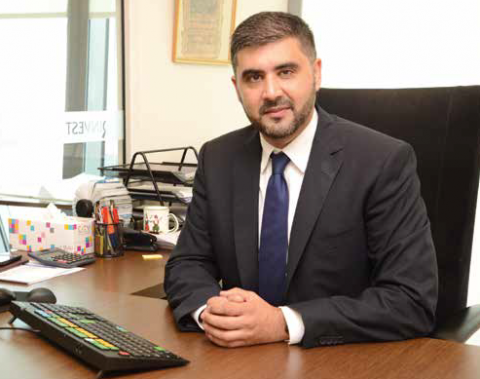
QInvest’s Head of Asset Management Dr Ataf Ahmed says the
past few years have seen an increasing level of
participation from local investors and this is set to
continue with more investment firms looking to move to
Qatar. There is also a growing level of interest from
foreign investors - both local and abroad - as local
investments are somewhat isolated from factors that impact
developed global markets.
As far as risks are concerned, Dr Ahmed says they are
primarily centered on a potential loss of confidence in
the event of a large exogenous political event in either
Qatar or nearby.
“Instability in Iraq and Syria has had minimal impact on
Qatar in the past. However if there were any significant
military action in one of the GCC countries, it is likely.
The potential loss of the 2022 World Cup is another risk
which, if it was to happen, would reduce confidence and
have a negative impact even though the actual impact on
GDP would be marginal,” Dr Ahmed says.
Richell says that the market is also experiencing a
significant amount of risk that requires close monitoring
and active management.
“Qatar can easily develop at an unsustainable pace where
development gets beyond the state’s ability to cope. In
addition, there is a need for a robust overall strategic
delivery plan that supports the QNV 2030 and the National
Development Strategy to avoid ad-hoc, unstructured
development, which could further affect Qatar’s ability to
deliver a clear and concise message to investors,
institutions and individuals alike,” he feels.
Another risk is the challenge to attract and retain highly
skilled professionals. There is strong competition for the
best talent and if Qatar is unable to attract and retain
the best then the industry will not achieve its full
potential.
The key risk, according to Pramberger, resides mainly in
the competition especially coming from the large
international asset manager selling their funds via third
party wealth managers in the region.
“The opportunities definitely exist since the per capita
earnings are very high and wealth management is an area
that is in its infancy. The risks are, of course, like in
any industry that one may be too slow to capture the
existing opportunities,” says Mohammed Ghiyath Sheikhah,
Head of Local and International Investments, Qatar
International Islamic Bank.
EM status
The upgraded standing of Qatar in the global equity
indices is also expected to give a boost to the country’s
asset management.
This international interest will continue to grow as
familiarity of the medium investment case for Qatar
improves,” says Akber Khan, Director Asset Management with
Al Rayan Investment.
He says on the domestic front, the recent fall in Qatari
deposit rates is a boon for the industry as it refocuses
both individual and corporate investors, towards
alternative options to boost returns on cash. Adjusting
for inflation, bank depositors have lost money for the
last three years. Many corporates are now considering
bonds and sukuk as a modestly higher risk, but more
lucrative, alternative.
“Even Qatar’s high-income expatriate population is an
investor category that is rapidly growing in importance.
They are experienced mutual fund investors and seek
exposure to the economic prospects of their new home via
equities and mutual funds,” Khan says.
Dr Ahmed also agrees that the upgrade - together with
increasing the cap on foreign ownership limits - has seen
more global groups increasing their exposure to Qatar.
This will help to bring in much needed liquidity to the
local markets. The upgrade will also encourage more
companies to list which will increase the size and depth
of the market, he says.
Richells predicts Qatar can attract around QR14.56 billion
($4 billion) in investment after being upgraded as
emerging market, and in addition, foreign ownership limits
of Qatari corporations has been increased from 25% to
49%.
Regulatory environment
Though the government has announced reorganisation of the
three regulators under the umbrella of Qatar Central Bank
in December 2012, the process is still on an evolving
stage in order to make the regulatory environment
conducive for the industry’s growth in Qatar.
Dr Ahmed opines that more work could be done to streamline
the regulatory regime and make it easier for firms to set
up and launch services. At present, it can take a long
time to establish a firm and set up funds. “Multiple
regulators with sometimes overlapping remits can also make
it challenging when compared with say the US or within
Europe, where there is one central authority in each
country and a clear process.
An additional issue is that whilst some regulators use
English and Arabic, others work primarily in Arabic, which
is a real obstacle for many international institutions,”
Dr Ahmed says.
Qatar is demonstrating a progressive approach to a more
accessible market for investors through platforms such as
the QFC and a tax regime that benefits investors at the
point of return, feels Richell.
An uphill task
Qatar still has to go a long way to become the leader of
the asset management industry in the GCC region as it has
to compete with Saudi Arabia, whose population is 28
million compared with its own 2.2 million.
Moreover, Saudi Arabia is home to hundreds of asset
managers and institutionalized family offices compared
with half a dozen asset managers in Qatar and only a
handful of family offices which organize investments on
institutional lines.
Though Qatar is ranked second in the world in wealth
generation per person at present, Saudi Arabia may
overtake in the coming years as its assets may start
contributing more to the GDP in the coming years. To
maintain its current position, Qatar has to make optimum
utilisation of its built assets.
“Saudi Arabia’s asset management industry assets are
estimated to be in excess of $100 billion (QR364 billion),
dwarfing the industry in Qatar. There is no reason for
Qatar’s asset management industry to be larger than its
neighbour unless the Qatari government was to divert
substantial funds towards it,” Akber Khan says.
Even Dr Ahmed is of the same view. “Saudi has a strong
advantage over all of the other GCC countries simply
because it has a much larger population and a deeper pool
of liquidity and wealth,” he says.
The surplus wealth provides an opportunity for Qatar to
embark on asset management industry aiming for leadership,
Sheikhah points out that the frame work created by the
government is very favourable for the industry though
risks such as the market entry costs may be on the high
side.
Richell however differ saying that leading asset
management across the GCC is not the core focus for Qatar.
“Given its unique set of circumstances, Qatar’s ambition
is on improving the community by strengthening health,
education and social mobility across the country. Qatar’s
key focus is on driving further economic diversification
across industries with extensive investment in
infrastructure development,” he points out.
Prime sectors
Which sectors are most sought after by investors in GCC
countries?
While Sheikhah feels that the energy sector is the most
sought after by the investors in which the built assets
can expect good returns, Pramberger says investors would
look at real estate and financials as they tend to
dominate domestic economies and invariably constitute more
than 50% of local equity market capitalisation. "Both
sectors are cyclical by nature, an attractive argument for
investment during the current positive economic cycle,”
Pramberger says.
Richell echoes the sentiments. Dr Ahmed, however, says
asset allocation really depends on the investor type
though investment is focused on energy, infrastructure,
real estate and domestic consumption.
“Most retail investors are less focused on sectors and
look more at either yield or potential growth rates for
their investments.
Meanwhile, institutional investors typically take a more
sophisticated approach to investing; one which is based on
factors such as a particular fund’s mandate and the
institution’s current macroeconomic view. For example,
QInvest, currently like sectors such as healthcare in
Saudi Arabia, consumer discretionary in the UAE and
industrial and materials in Qatar,” Dr Ahmed says.
Click here